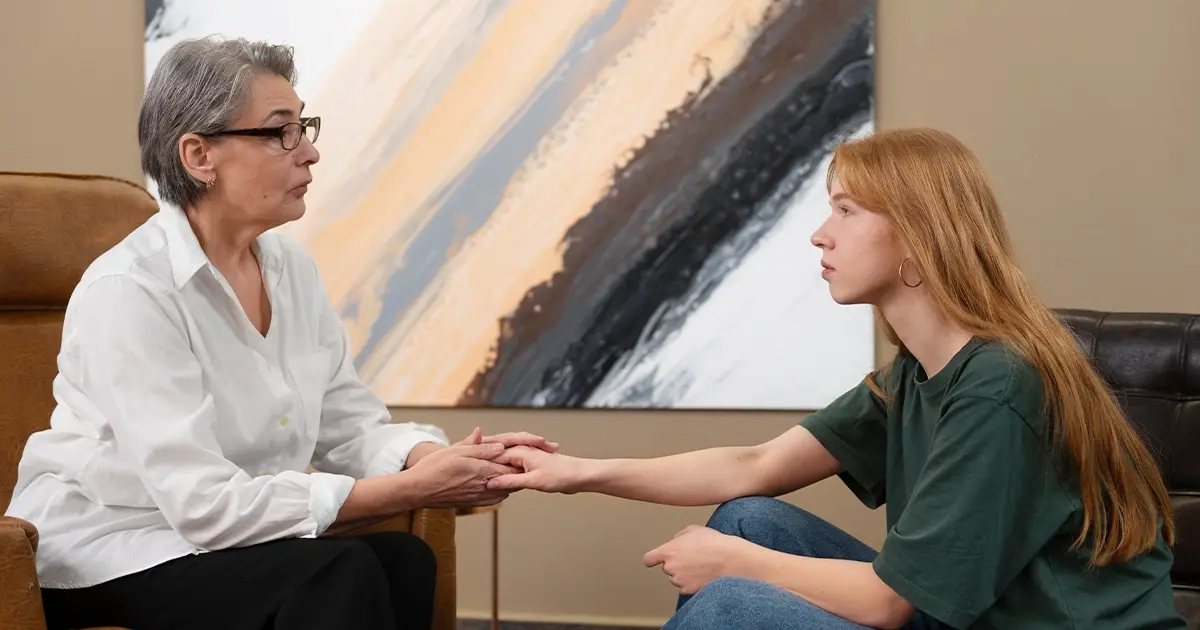
Grief can make everyday life feel unfamiliar.
You may still go to work, answer messages, care for family, and move through familiar routines while feeling as though something fundamental has changed. Some days the loss feels close and overwhelming. On other days you may function almost normally and then feel confused or guilty because you did.
There is no single correct way to grieve.
A grief support group in Mississauga can provide a structured place to talk about loss, listen to others who understand aspects of the experience, learn coping strategies, and feel less alone without being pressured to “move on.”
How Can a Grief Support Group Help After a Loss?
A grief support group can help by creating regular opportunities for connection, reflection, and shared understanding after a loss. Professionally guided groups may also offer grief education, coping strategies, emotional support, and space to talk at your own pace. Group support does not remove grief, but it can make carrying it feel less isolating.
At Nurturing Wellness, our broader Support Groups in Mississauga are designed around shared learning, emotional awareness, coping skills, and community connection. Specific topics and group availability may change throughout the year.
Grief Does Not Follow a Fixed Timeline
You may have heard grief explained through a series of stages.
While stage-based ideas can sometimes give people language for difficult emotions, grief does not unfold in a predictable sequence that everyone completes.
Canadian grief resource MyGrief.ca explains that grief can vary in intensity, return months or years later, and look very different from one person to another. Even members of the same family can respond to the same loss differently. Read MyGrief.ca guidance on how grief changes over time
You may experience:
- Sadness or longing
- Anger or frustration
- Guilt or regret
- Relief
- Emotional numbness
- Difficulty concentrating
- Changes in sleep or appetite
- A sense that everyday routines feel different
- Strong reactions around anniversaries, holidays, or reminders
None of these responses automatically means you are grieving incorrectly.
Grief is shaped by your relationship with the person who died, the circumstances of the death, your culture and beliefs, the support available to you, previous losses, and what else is happening in your life.
Why Can Grief Feel So Lonely?
Loss often brings people together initially.
Friends may call. Family may visit. People send condolences, attend services, or offer practical help.
Then ordinary life starts again for everyone else.
For the grieving person, however, the reality of the loss may become more noticeable exactly when outside attention begins to fade.
You may worry that people are tired of hearing about the person who died. You may stop mentioning your grief because you do not want to make others uncomfortable. Or you may be surrounded by people and still feel that nobody quite understands what has changed.
A grief support group can create a space where you do not have to explain why the loss still matters.
The reason you are there is already understood.
What Is a Grief Support Group?
A grief support group brings together people who have experienced bereavement so they can share, listen, reflect, and learn within a structured group environment.
Depending on the program, grief groups may include:
- Optional check-ins
- Guided discussion
- Grief education
- Coping strategies
- Reflection exercises
- Emotional regulation tools
- Conversation about anniversaries and triggers
- Space to remember the person who died
- Opportunities to hear how other people are adapting to loss
Government of Canada guidance on bereavement support describes groups as spaces that can provide support, education, resources, and an opportunity for grieving people to be heard and supported. Read Government of Canada guidance on bereavement support groups
What Can Shared Grief Support Offer That Friends and Family May Not?
Friends and family can be deeply important during grief.
A group is not intended to replace those relationships.
It offers something different.
You Do Not Have to Protect Everyone Else
Sometimes people who are grieving hold back because they worry about upsetting a spouse, child, parent, or friend.
In a grief group, loss is already the focus of the conversation.
That can reduce the pressure to make your experience easier for someone else to hear.
You May Hear Someone Put Your Experience Into Words
Another group member may describe:
- Feeling guilty for having a good day
- Dreading an anniversary
- Feeling angry at people who mean well
- Being exhausted by ordinary responsibilities
- Missing the person in unexpected moments
Your experience does not have to be identical for their words to resonate.
Sometimes recognition itself can reduce isolation.
You Can See That There Is More Than One Way to Grieve
One person may want to talk often.
Another may need silence.
Someone may feel intense sadness, while another experiences numbness or relief alongside grief.
Hearing different responses can make it easier to accept that there is no single correct way to mourn.
Do Grief Support Groups Actually Help?
Research on bereavement groups is encouraging in some areas but should be described carefully.
A 2020 systematic review found small short-term benefits from bereavement groups overall, while also noting substantial variation between studies and limited evidence for longer-term effects. Read the bereavement-group systematic review on PubMed
More recent research on structured group psychotherapy for people experiencing prolonged grief symptoms has found improvements in grief-related distress in several group-based approaches, though the authors also noted differences between programs and limitations in long-term follow-up. Review research on group therapy for prolonged grief symptoms
A broader 2026 systematic review found stronger evidence for individual psychotherapy in bereaved adults, while expert-facilitated support groups showed more limited but potentially useful benefits for some outcomes. Review evidence on care for bereaved people
For that reason, we do not frame grief groups as a guaranteed treatment or as the right option for everyone.
The better question is:
Does this kind of support fit what you need right now?
What Happens in a Grief Support Group Session?
Every group is different, so the exact format should always be confirmed with the provider.
A session may begin with a brief check-in or grounding exercise.
The facilitator might then introduce a topic such as:
- Loneliness after loss
- Guilt
- Anger
- Identity changes
- Family differences in grieving
- Holidays and anniversaries
- Sleep and daily routines
- Maintaining connection to memories
- Returning to work
- Asking others for support
Participants may be invited to reflect or share, but a supportive group should respect different levels of readiness.
The session may end with a check-out or grounding activity to help participants transition back into the rest of their day.
Do I Have to Tell the Whole Story of My Loss?
No.
You should not need to tell the full story before you feel ready.
Some people enter a group wanting to talk.
Others barely know what to say.
Listening can still be meaningful.
You may begin by noticing what resonates, learning how the group works, and deciding gradually what you feel comfortable sharing.
Nurturing Wellness encourages participants in its support groups to participate at a pace that feels manageable. Some people share openly while others prefer to listen first.
What Coping Skills Can Grief Support Include?
Grief cannot be reduced to a set of techniques.
Still, some practical strategies can help you manage moments when emotions, reminders, or daily responsibilities feel especially difficult.
Depending on the group or therapy approach, support may involve:
Grounding
Grounding can help you reconnect with the present when emotions feel overwhelming.
This may involve noticing your breathing, physical surroundings, or sensory details around you.
Emotional Naming
Instead of simply saying:
“I feel terrible.”
you may begin identifying whether you feel sadness, anger, guilt, loneliness, fear, relief, regret, or exhaustion.
Naming emotions more precisely can make them easier to understand and communicate.
Planning for Difficult Dates
Birthdays, anniversaries, religious holidays, family events, and the date of the death can intensify grief.
Planning ahead may include deciding:
- Who you want around you
- Whether you want to mark the day
- What commitments you want to avoid
- How you might remember the person
Maintaining Basic Routines
When grief affects concentration or energy, even ordinary tasks may become difficult.
Support can help you consider realistic ways to maintain sleep, meals, movement, work responsibilities, and social connection without expecting yourself to function exactly as you did before the loss.
When Is Grief Support Group Therapy Different From Individual Grief Therapy?
A grief group and individual therapy can both offer meaningful support, but they serve different purposes.
A Grief Group Offers Shared Experience
Group support can be particularly valuable when you want:
- Connection with other grieving people
- Less isolation
- Different perspectives
- Shared reflection
- A place where grief does not need to be explained
Individual Therapy Offers More Personal Depth
One-to-one therapy may be a better fit when you need focused attention on:
- Your personal history
- Trauma surrounding the death
- Depression or anxiety
- Family or relationship conflict
- Guilt or self-blame
- Private experiences you do not want to discuss in a group
- Grief that is significantly affecting daily functioning
Nurturing Wellness’s Individual Therapy in Mississauga specifically includes grief and life transitions among the concerns clients can explore privately with a therapist.
Some people choose one format.
Others may use both.
When Does Grief Become More Than the Usual Bereavement Process?
Intense grief after a death is not automatically a mental-health disorder.
There is also no rule that says grief should disappear after a certain number of weeks or months.
However, a small proportion of people develop prolonged grief disorder, where severe and persistent grief continues to cause substantial distress and interfere with daily functioning.
The American Psychiatric Association notes that prolonged grief disorder involves persistent grief symptoms and significant impairment beyond what would be expected within the person’s social, cultural, or religious context. Learn about prolonged grief disorder from the American Psychiatric Association
A professional assessment may be worth considering if grief is persistently interfering with your ability to:
- Work or study
- Care for yourself
- Maintain important relationships
- Re-engage with daily life
- Experience meaning or connection
This is not about deciding that your grief has lasted “too long.”
It is about recognizing when you may benefit from more individualized support.
When Should You Reach Out for Grief Support?
There is no required waiting period.
Some people want support soon after a death.
Others may not feel ready until months or years later.
You may consider reaching out when:
- You feel increasingly isolated
- You want to talk about your loss without feeling like a burden
- Daily responsibilities feel difficult to manage
- You are struggling with guilt, anger, numbness, or anxiety
- Anniversaries or reminders feel overwhelming
- You are withdrawing from people and activities
- Family members are grieving very differently
- You want support learning how to live with the loss
Reaching out does not mean you are grieving incorrectly.
It means you do not want to carry everything alone.
What If the Loss Was Traumatic or Sudden?
Some deaths bring additional layers of trauma.
You may be dealing not only with missing the person but also with distressing memories, unanswered questions, guilt, or images connected to the circumstances of the death.
In those situations, a support group may still provide connection, but individual therapy can offer more focused space for trauma-related experiences.
At Nurturing Wellness, Chloë Brown, Registered Psychotherapist and founder works with adults, teens, and children experiencing grief and loss, trauma, PTSD, and anxiety. Her approach includes mindfulness-based, compassion-focused, and EMDR-informed work where appropriate.
The goal is to match support to the person rather than assume every grief experience needs the same intervention.
Is a Grief Support Group Right for Everyone?
Not necessarily.
A group may be a good fit if you value shared experience and feel ready to be around other people discussing grief.
You may prefer individual therapy if you:
- Need greater privacy
- Feel easily overwhelmed in groups
- Want to focus deeply on your specific loss
- Are dealing with significant trauma or mental-health symptoms
- Need more individualized clinical attention
You can also begin with individual therapy and consider group support later.
There is no single correct pathway.
What About Confidentiality in a Grief Support Group?
Privacy should always be discussed clearly.
Professional facilitators can establish expectations and explain the limits of confidentiality. Participants are also expected to respect one another’s privacy.
At the same time, no provider can guarantee what another participant will do outside the group.
Nurturing Wellness explains privacy expectations and confidentiality limits as part of its group process, and participants are expected to respect the privacy of other members.
If privacy concerns make you hesitant, ask how confidentiality is handled before registering.
Grief Support in Mississauga at Nurturing Wellness
Nurturing Wellness offers support groups and workshops from its Mississauga clinic, with offerings changing throughout the year.
The clinic’s main Support Groups in Mississauga page notes that grief may be included among current or future group topics. Groups are professionally guided, usually kept relatively small, and may be offered in different formats depending on the program.
Because grief-group availability can change, we recommend checking the current schedule or contacting Nurturing Wellness before planning around a specific program.
If a grief group is not currently available, individual therapy may still provide one-to-one support for grief and loss.
You Do Not Have to “Get Over” Someone You Loved
Grief support is not about erasing the relationship or forcing yourself to stop missing someone.
For many people, adjustment means finding ways to carry the significance of the person while continuing to participate in life.
That may include talking about them.
Remembering them.
Feeling sadness when reminders appear.
Laughing again without guilt.
Creating new routines while keeping meaningful connections to the past.
Support can make room for all of those experiences.
If grief has begun to feel too isolating to carry alone, you can explore current support groups and workshops at Nurturing Wellness, learn more about individual therapy for grief and life transitions, or book a consultation to discuss what kind of support may fit your needs.
Frequently Asked Questions
A grief support group may include guided check-ins, optional sharing, grief education, reflection, coping strategies, and discussion with other people who have experienced loss. The exact structure varies by program. You should not have to share more than you feel ready to discuss, and professionally guided groups should explain participation and privacy expectations clearly.
It can. Grief groups provide regular contact with people who understand aspects of bereavement and can create opportunities to feel heard without repeatedly explaining why the loss still matters. Research suggests bereavement groups can provide some benefits, although outcomes vary and groups should not be presented as a guaranteed treatment.
No. People may seek grief support weeks, months, or years after a death. Grief can become more noticeable around anniversaries, holidays, major life events, or periods of change. The right time to seek support is when you feel that additional connection, coping strategies, or professional guidance could be useful.
A group may suit you if shared experience and connection feel helpful. Individual therapy offers more privacy and can focus more deeply on your specific circumstances, trauma history, symptoms, and goals. Some people use one approach, while others combine both depending on their needs and readiness.
Prolonged grief disorder is different from ordinary grief. It involves persistent, intense grief after the death of someone close that causes significant distress or interferes with daily functioning beyond what would be expected within the person’s cultural and social context. Diagnosis requires assessment by an appropriate qualified professional.
No. Many people prefer to listen first. Participating at your own pace can help you understand the group and decide what feels comfortable to share. Nurturing Wellness’s broader support-group approach allows participants to engage gradually rather than requiring immediate personal disclosure.
Groups establish confidentiality and privacy expectations, but complete confidentiality cannot be guaranteed because other participants hear what is discussed. The facilitator should explain group expectations and the limits of confidentiality before or during participation.
Nurturing Wellness offers individual therapy for grief and loss and periodically offers professionally guided support groups and workshops in Mississauga. Because group topics and availability change, check the clinic’s current Support Groups page or contact the clinic before registering.
If grief is accompanied by thoughts of suicide or you feel you may be in immediate danger, seek urgent support rather than waiting for a group session. In Canada, call or text 9-8-8 for the Suicide Crisis Helpline, available 24/7, or call 9-1-1 in an emergency. Government of Canada mental-health crisis resources