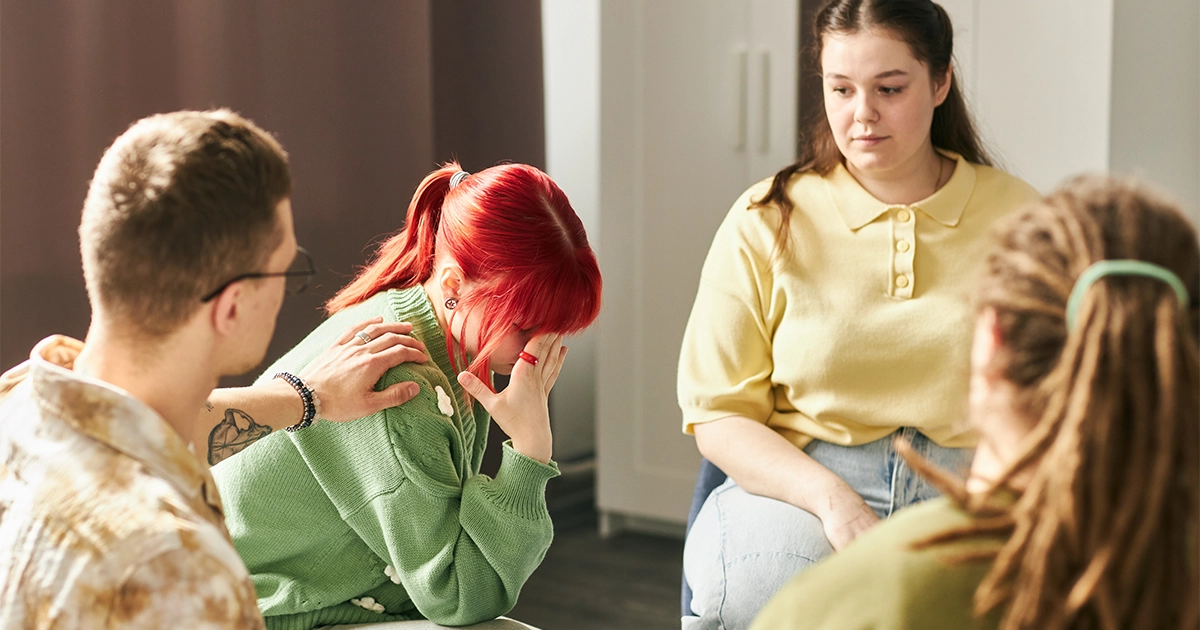
A grief support group in Mississauga can help by giving people a safe, structured place to share loss, feel understood, reduce isolation, and receive guided emotional support. For many people, a therapist-led grief group can offer connection and steadiness without pressure to “move on” before they are ready.
Grief can make the world feel unfamiliar. People may still care about you, send messages, bring food, or say they are available, but the inner experience of loss can still feel deeply lonely. Some days may feel heavy. Other days may feel strangely normal, followed by guilt. You may want to talk about the person you lost, but worry that others are tired of hearing it.
A grief support group in Mississauga can offer a different kind of support. Instead of explaining grief from the beginning every time, you enter a space where loss is already understood as the reason you are there. At Nurturing Wellness, counselling support groups are designed to help people feel less alone while respecting the pace, privacy, and complexity of their experience.
Why Can Grief Feel Lonely Even When You Have Support?
Grief can feel lonely because ordinary support often fades before the grieving person feels ready. Many people do not know how to stay present with pain that has no quick fix. A grief support group in Mississauga can create steady space for grief after the early wave of attention has passed.
In the first days or weeks after a death, people may show up intensely. They attend services, send condolences, and ask what they can do. Later, life moves forward for everyone else. For the grieving person, the loss may become more real exactly when outside support becomes quieter. This mismatch can make grief feel isolating, even within a caring family or community.
Grief can affect emotions, routines, energy, identity, relationships, and the body. Canadian grief resource MyGrief.ca explains that grief can affect people emotionally, physically, and mentally, and that each grief experience is different. This matters because grief support should not treat grief as weakness. It should recognize grief as a human response that may need time, care, and support.
People often search for grief support in Ontario when they realize they do not only need advice. They need companionship, structure, and permission to speak honestly. For some, that may mean individual therapy in Mississauga. For others, it may mean a therapist-led grief support group where shared experience reduces the pressure to carry everything alone.
What Is a Grief Support Group?
A grief support group is a structured meeting where people affected by loss can share, listen, learn coping tools, and feel understood by others with similar emotional experiences. Support group therapy in Mississauga can be helpful when grief feels isolating, repetitive, or difficult to discuss with friends and family.
A grief support group is not a classroom, social club, or place where someone tells you how quickly to recover. It is a supportive therapeutic space where loss can be spoken about directly. A group may include people grieving a spouse, parent, sibling, friend, child, relative, pet, or another meaningful relationship. Some groups may be general, while others may focus on specific types of loss.
In a therapist-led grief group, the facilitator helps maintain emotional safety, respectful sharing, pacing, and boundaries. This is different from trying to process grief in unstructured conversations where people may unintentionally compare losses, rush reassurance, or offer advice that does not fit.
A grief support group may help with:
- Loneliness after the funeral, memorial, or early support period has passed
- Feeling misunderstood by people who expect you to “be better” already
- Guilt, anger, numbness, sadness, relief, regret, or mixed emotions after loss
- Anniversaries, holidays, birthdays, and ordinary routines that now feel different
- Learning how others carry grief while still building life around the loss
- Finding words for pain without needing to perform strength
This is why counselling support groups at Nurturing Wellness can be a bridge between informal support and one-to-one therapy. They offer connection while still holding a supportive and guided structure.
How Is a Therapist-Led Grief Group Different From Informal Support?
A therapist-led grief group offers guided safety, clearer boundaries, and emotional containment. Informal support depends on who is available and how comfortable they are with grief. For people comparing grief support options in Ontario, facilitation can make the difference between feeling exposed and feeling supported.
Informal grief support can be valuable. Friends, relatives, faith communities, neighbours, and peers may provide meals, comfort, childcare, conversation, and practical help. However, informal support is not always consistent. Some people avoid saying the loved one’s name. Others try to fix the pain. Some give timelines, comparisons, or reassurance that does not feel supportive.
A therapist-led grief group is more intentional. The therapist or trained facilitator helps protect the group from becoming overwhelming, advice-heavy, or emotionally unsafe. This does not mean the group is formal or cold. It means care has structure.
| Type of support | What it may offer | Possible limitation | Best fit |
| Family and friends | Practical help, memories, emotional closeness | May not know what to say or may expect recovery too soon | Everyday support and connection |
| Peer-led grief group | Shared lived experience and mutual understanding | Less clinical structure depending on the group | People wanting community-based support |
| Therapist-led grief group | Safety, pacing, boundaries, coping tools, guided discussion | May feel unfamiliar at first | People wanting shared grief with professional containment |
| Individual grief therapy | Private, tailored support | Less peer connection | Complex grief, trauma, depression, or personal processing |
For people who are unsure whether group support or individual care is the better fit, Nurturing Wellness counselling support groups and individual therapy can offer different pathways depending on comfort, safety, and readiness.
What Happens in a Grief Support Group?
A grief support group usually includes guided check-ins, optional sharing, listening, grief education, coping strategies, reflection, and a closing process that helps members leave the session grounded. Support group therapy in Mississauga should be structured enough to feel safe, but flexible enough to honour different grieving styles.
People often worry they will be forced to speak, cry, or share details before they are ready. A well-run therapist-led grief group should not pressure people into emotional disclosure. Some members may speak in the first session. Others may mostly listen until trust grows. Listening can still be meaningful because it helps normalize experiences that may feel private, confusing, or difficult to name.
A typical group may include:
- A brief opening or grounding exercise
- Optional check-ins
- A shared theme related to grief
- Group reflection or guided discussion
- Coping tools or emotional regulation strategies
- A closing check-out to help members leave the session grounded
Themes may include loneliness, guilt, anger, sleep, anniversaries, identity changes, family expectations, or how to respond when others say painful things unintentionally.
At Nurturing Wellness, a grief support group approach would centre emotional safety, respect, and practical support. The goal is not to make everyone grieve the same way. The goal is to help people feel less alone inside their own grief.
How Does Sharing Help Without Forcing Closure?
Sharing helps because grief often becomes heavier when it is carried in silence. A healthy group does not force closure, meaning, forgiveness, or positivity. A therapist-led grief group allows people to be witnessed while keeping grief open, honest, and paced.
Many people fear that joining a group means they must tell the full story of the death, explain every feeling, or reach some final stage of acceptance. That is not what supportive group care should require. Grief is not a checklist. It changes over time, and some losses continue to shape life for years.
The phrase “moving on” can feel painful because it may sound like leaving the person behind. Many grieving people are not trying to erase the loss. They are trying to learn how to live with it.
A grief support group in Mississauga can support that process by making room for memory, sadness, love, anger, humour, guilt, silence, and uncertainty. Sharing may help because another person says, “me too,” in a way that feels real. It may help because you hear someone name a feeling you thought was wrong. It may help because you see someone further along who still grieves, yet is also living.
This kind of shared witnessing can reduce shame and loneliness without demanding closure.
Who Can Benefit From a Grief Support Group?
A grief support group can benefit people who feel isolated, misunderstood, emotionally stuck, or unsure how to carry loss in daily life. Grief support in Ontario may be especially helpful after the early support period ends, during anniversaries, or when family and friends cannot fully understand the loss.
A grief support group in Mississauga may be helpful for people grieving many kinds of loss, including the death of a:
- Partner or spouse
- Parent
- Sibling
- Friend
- Child
- Relative
- Pet
- Co-worker
- Person connected to a complicated relationship
A group may also support people facing anticipatory grief, ambiguous grief, or grief that others do not fully recognize.
A group may be suitable if:
- You feel alone even when people are around you
- You want to talk about the person you lost without feeling like a burden
- You feel stuck between wanting support and not wanting advice
- You need a place where grief is normal, not uncomfortable
- You struggle with anniversaries, holidays, birthdays, or daily reminders
- Individual therapy feels too private or intense right now
- You are already in grief therapy and want additional community support
A group may not be enough on its own if grief is connected to severe trauma, active suicidal thoughts, unsafe substance use, inability to function, or overwhelming depression. In those cases, individual therapy, medical support, crisis support, or a higher level of care may be needed.
If there is immediate risk of self-harm or suicide, call emergency services. In Canada, you can also call or text 9-8-8: Suicide Crisis Helpline for 24/7 crisis support.
When Should You Reach Out for Grief Support?
You should reach out when grief feels too heavy to carry alone, when daily functioning is affected, or when isolation is making the loss harder. Grief therapy and support group therapy in Mississauga can both help, depending on whether you need private processing, shared support, or both.
Some people seek support within weeks. Others wait months or years. There is no single correct time. The better question is whether grief has become too isolating, confusing, or difficult to manage without additional support. Reaching out does not mean your grief is abnormal. It means you are allowing support into a painful part of life.
You may want grief support if sadness, guilt, numbness, anger, anxiety, or loneliness continues to interfere with sleep, work, parenting, relationships, or basic routines. Support may also help if you feel pressured to be “fine” for others while privately feeling broken.
For people in Mississauga, Nurturing Wellness offers a local starting point. You can learn more about the clinic’s therapeutic approach through the About Us page or explore counselling support groups to decide whether group support, individual therapy, or another support pathway feels right.
How Nurturing Wellness Supports Grief Without Rushing You
Nurturing Wellness supports grief by creating spaces where loss can be named without judgment, pressure, or forced positivity. A therapist-led grief group may help members feel understood, while individual therapy can offer more private support when grief feels complex, traumatic, or deeply personal.
The clinic’s approach recognizes that grief can affect identity, routines, relationships, memory, work, family life, and the body. Support is not about making grief disappear. It is about helping people carry loss with more steadiness and less isolation.
For some people, that may mean joining a grief support group when available. For others, it may mean starting with individual therapy in Mississauga before joining a group.
Nurturing Wellness also understands that people come with different levels of readiness. Some are desperate to speak. Others are afraid they will fall apart if they start. Some feel numb and wonder if they are grieving “wrong.” A therapist-led group can make space for these different experiences when the group is facilitated with care.
For people comparing support group therapy and grief therapy in Mississauga, a consultation can help clarify fit. The right support should match your loss, your current capacity, your safety needs, and your comfort with group sharing.
Summing Up
If grief feels isolating, you do not have to carry it alone. A grief support group in Mississauga may offer connection, structure, and understanding at a time when ordinary support may no longer feel like enough.
Nurturing Wellness provides counselling support groups in Mississauga and individual therapy for people seeking emotional support at their own pace.
To explore whether grief group support or individual therapy is the right fit, Book a consultation and begin with support that respects your grief.
FAQs
A grief support group usually includes guided check-ins, optional sharing, listening, grief education, coping tools, and a closing reflection. You may hear others describe experiences similar to yours, which can reduce isolation. A therapist-led group also helps keep the conversation respectful, paced, and emotionally safe. You do not need to share more than you are ready to share.
A grief support group is therapeutic, but it is not always the same as individual therapy. A group focuses on shared support, normalization, listening, and guided discussion. Individual therapy gives more private attention to your personal history, trauma, symptoms, and goals. Some people benefit from one option, while others use both depending on their needs.
No, you should not have to talk in the first session if you are not ready. Many people begin by listening, noticing how the group feels, and sharing only small details. A safe therapist-led group should respect pacing and consent. Speaking can become easier after trust develops and you understand the group structure.
Grief support groups may help after complicated loss by reducing isolation and offering shared understanding, but they may not be enough by themselves if the loss was traumatic, sudden, violent, or connected to severe guilt, depression, or safety concerns. In those cases, individual therapy may also be important. A consultation can help determine whether group support, private therapy, or both are suitable.
Online grief support groups may be available in Ontario and can be helpful for people who cannot attend in person, have transportation barriers, or feel safer beginning from home. Online groups still need privacy, clear structure, and safe facilitation. A therapist can help you decide whether online support is appropriate for your comfort level, grief needs, and emotional safety.
You may need grief therapy instead of, or alongside, a group if your grief feels traumatic, overwhelming, isolating, or connected to depression, panic, guilt, self-blame, or thoughts of not wanting to live. A group can reduce loneliness, but individual therapy offers more focused support. The right choice depends on safety, severity, privacy needs, and readiness.
You can start by exploring counselling support groups at Nurturing Wellness or booking a consultation to ask what support options are currently available. Depending on your needs, grief support may include group support, individual therapy, online therapy, or referrals to additional resources.
No. Grief support is not only for recent loss. Some people seek support weeks after a death, while others reach out months or years later. Anniversaries, birthdays, holidays, life transitions, or new losses can bring grief forward again. Support can be helpful whenever grief feels too heavy, isolating, or difficult to carry alone.