
Mindfulness Therapy in Mississauga Find Calm, Clarity & Emotional Balance
When stress, worry, racing thoughts, or emotional overwhelm feel hard to manage, mindfulness therapy can help you slow down and reconnect with the present moment. At Nurturing Wellness in Mississauga, mindfulness-based support is offered in a warm, practical, and trauma-informed way.
At Nurturing Wellness
We provide mindfulness therapy in Mississauga to support clients who want to feel more present, less reactive, and more grounded in daily life. Mindfulness-based therapy can help with stress, anxiety, burnout, low mood, emotional reactivity, overthinking, and feeling disconnected from yourself or your body.
Whether you are navigating chronic stress, relationship strain, life transitions, anxiety, depression, or difficulty slowing your mind down, our Registered Psychotherapists offer personalized support that meets you where you are.
Mindfulness is not about emptying your mind or forcing yourself to feel calm. It is about learning to notice thoughts, emotions, and body sensations with more awareness, less judgment, and more choice in how you respond.
Signs It May Be Time For Mindfulness Therapy
Mindfulness-based therapy can help if you’re experiencing:
- Chronic stress or burnout
- Anxiety or worry
- Emotional reactivity
- Physical tension or pain
- Feeling disconnected
- Relationship difficulties
- Racing thoughts
- Difficulty focusing
- Depression or low mood
- Difficulty letting go
- Chronic pain conditions
- Life transitions
Mindfulness therapy can be especially helpful when you feel caught in overthinking, worry, self-judgment, or emotional shutdown. Instead of trying to push difficult thoughts away, therapy helps you notice what is happening internally and build steadier ways to respond.

Our Approach To Mindfulness Therapy
At Nurturing Wellness, we integrate evidence-based mindfulness approaches tailored to your specific needs and goals. Our therapists are trained in multiple mindfulness-based modalities to provide comprehensive, personalized care.

Mindfulness-Based Stress Reduction (MBSR)
Developed by Dr. Jon Kabat-Zinn, MBSR is the gold standard of mindfulness training, a structured 8-week program teaching formal practices including body scan, sitting meditation, and mindful movement. It helps individuals develop awareness of stress patterns, recognize triggers before they escalate, and cultivate a calmer nervous system response, with research showing significant reductions in stress, anxiety, and chronic pain.

Mindfulness-Based Cognitive Therapy (MBCT)
Combining mindfulness practices with cognitive therapy techniques, MBCT helps recognize negative thought patterns early, before they spiral into rumination or low mood. Particularly effective for recurring depression, anxiety, or cycles of negative thinking, studies show it reduces depression relapse rates by up to 50%.

Acceptance and Commitment Therapy (ACT)
ACT integrates mindfulness with values-based action, teaching psychological flexibility, the ability to be present with discomfort while moving toward what matters most. This approach helps clarify values, defuse unhelpful thoughts, and take committed action even in the presence of anxiety or fear, making it especially helpful for feeling stuck or paralyzed by difficult emotions.

Dialectical Behavior Therapy (DBT) Mindfulness Skills
DBT includes mindfulness as one of its core skill sets and helps observe & describe experiences without judgment, participate fully in the present moment, and focus on one thing at a time with full attention. These practical, accessible skills are particularly helpful for emotional regulation difficulties, relationship challenges, and intense emotional experiences.

Your Personalized Approach
Your therapist will adapt mindfulness-based support to your needs, preferences, and goals. Some clients benefit from structured practice, while others need mindfulness tools gently woven into individual therapy. The process is collaborative, practical, and paced around what feels useful and sustainable for you.
Benefits of Mindfulness Therapy
Clients who engage in mindfulness therapy often experience:

Reduced Stress & Anxiety

Better Emotional Control
Notice emotions early and respond thoughtfully

Improved Focus & Concentration
Stay present and reduce mental clutter.

Better Sleep
Quiet racing thoughts and relax for restorative rest.

Relief from Chronic Pain
Reduce distress and shift your relationship with pain.

Lower Depression Symptoms

Greater Self-Compassion
Be kinder to yourself and accept imperfection.

Increased Resilience
What To Expect From Mindfulness Therapy Sessions
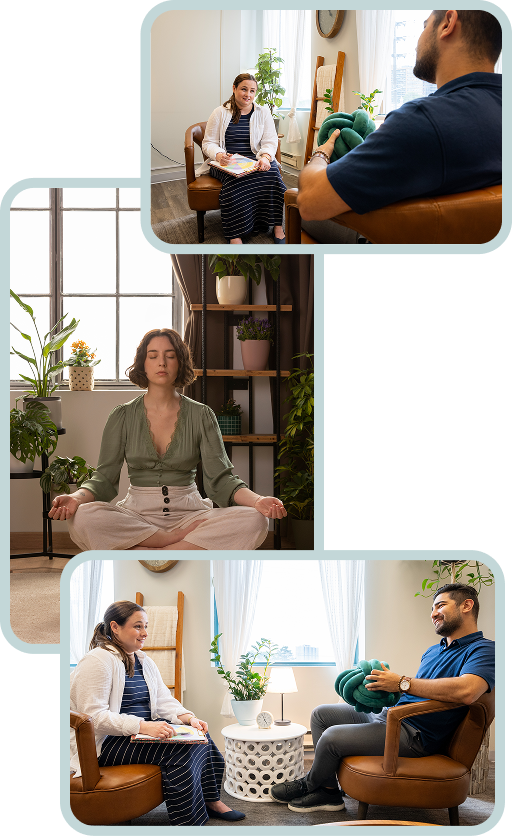
Understanding the process helps reduce uncertainty about starting. Here’s how mindfulness therapy typically unfolds:
Your therapist will begin by learning about your current concerns, stress patterns, symptoms, goals, and any previous experience with mindfulness or meditation. You can ask questions, share what feels difficult, and begin identifying what kind of support may feel most helpful.
Together, you may begin with simple mindfulness practices such as breathing exercises, grounding, body awareness, mindful observation, or guided reflection. The goal is not to practice perfectly. The goal is to build awareness in a way that feels accessible, safe, and realistic for your life.
As practices become more familiar, we explore how to apply mindfulness to your specific challenges, whether that’s anxiety management, emotion regulation, pain relief, relationship difficulties, or breaking unhelpful patterns.
You’ll practice bringing mindfulness into daily activities, difficult moments, and real-life situations. The goal is sustainable change that extends beyond the therapy room.
For those who continue, we deepen practices, explore more advanced techniques, and work on maintaining progress during life’s inevitable challenges. Many clients transition to less frequent “maintenance” sessions while continuing their own practice.
- Guided mindfulness exercises and meditation practices
- Discussion of your experiences, challenges, and insights
- Psychoeducation about the brain, stress response, and how mindfulness creates change
- Practical tools for managing specific symptoms (anxiety, pain, difficult emotions)
- Home practice assignments to build skills between sessions
- Exploration of values, meaning, and what matters most to you
Session Details:
Length: 50 or 75 minutes
Frequency: Weekly or bi-weekly
Duration: Many clients notice improvement within 4-8 sessions. Ongoing therapy continues as long as it is beneficial.
Format: Individual sessions or group programs (when available)


Meet Your Mindfulness Therapist In Mississauga
When stress, anxiety, or emotional overwhelm feel unmanageable, having the right support makes all the difference.
As a therapist trained in mindfulness-based approaches, I help clients develop practical tools to navigate life’s challenges with greater ease, clarity, and compassion. My work focuses on teaching accessible mindfulness practices that fit your life, not adding more pressure or perfection to your plate.
I draw on Mindfulness-Based Stress Reduction (MBSR), Mindfulness-Based Cognitive Therapy (MBCT), and Acceptance and Commitment Therapy (ACT) to help you understand how your mind works, recognize unhelpful patterns, and create sustainable change.
Whether you’re struggling with chronic stress, anxiety, depression, burnout, or simply want to live with more presence and intention, mindfulness therapy offers evidence-based practices that create lasting transformation.
Together, we work toward calmer nervous system regulation, improved emotional well-being, and the ability to respond to life’s challenges from a place of groundedness rather than reactivity.
Training & Credentials:
- Master of Science in Clinical Mental Health Counselling – University of Rochester Warner School of Education
- Master of Arts in Bioethics – New York University
- Bachelor of Arts in Mind-Body Medicine – New York University
- Registered Psychotherapist (Qualifying) with CRPO
- Certified Mindfulness Trainer
- Pain Reprocessing Therapy Training
- Level 2 Reiki Practitioner
- RYT-200 Certified Yoga Teacher
Conveniently Located In Mississauga
Our Mississauga therapy clinic provides mindfulness-based therapy in a welcoming and accessible setting, with convenient parking and flexible scheduling, including evening appointments.
We serve individuals from: Mississauga, Oakville, Brampton, Milton, Burlington, Etobicoke, and surrounding areas.
Virtual mindfulness therapy session is available for clients across Ontario who prefer online sessions from the comfort of home.
Questions About Mindfulness Therapy in Mississauga
Your first session focuses on understanding your current challenges, stressors, goals, and any previous experience with mindfulness or meditation. Your therapist may explain how mindfulness-based therapy works, answer your questions, and introduce a simple practice if it feels appropriate.
No. You do not need meditation experience to begin mindfulness therapy. Your therapist can introduce mindfulness in simple, practical ways and adapt the pace to your comfort level. Many clients begin with no prior practice.
Mindfulness may feel relaxing at times, but relaxation is not the only goal. Mindfulness is about noticing thoughts, emotions, and body sensations with more awareness and less judgment. It can include breathing exercises, but it also helps you relate differently to stress, discomfort, and emotional patterns.
Yes. Extensive research shows mindfulness-based therapies are highly effective for anxiety and depression. MBCT reduces depression relapse by up to 50%, and MBSR significantly decreases anxiety symptoms. Mindfulness teaches you to observe anxious or depressive thoughts without getting trapped in them.
The timeline varies depending on your goals, concerns, consistency, and current stress level. Some clients notice small shifts early, such as feeling more aware or less reactive. Deeper change often develops gradually as mindfulness skills become easier to use in daily life.
While daily practice creates the most benefit, you don’t need to practice perfectly or for long periods to experience change. Even 5-10 minutes several times per week can make a meaningful difference. Your therapist will help you find a sustainable practice that fits your life.
Mindfulness therapy at Nurturing Wellness is offered as a therapeutic and practical approach. It does not require any religious or spiritual belief. The focus is on awareness, emotional regulation, coping, and present-moment connection in a way that respects your values.
This is a common misconception. Mindfulness isn’t about stopping thoughts, it’s about changing your relationship with them. You’ll learn to notice thoughts without getting caught up in them, like watching clouds pass across the sky. Racing thoughts are normal and expected, especially when starting out.
Ready to Find More Calm, Clarity & Peace?
You do not have to manage stress, worry, emotional overwhelm, or racing thoughts on your own. Mindfulness therapy can help you build practical tools for staying present, grounded, and connected to yourself with more care and steadiness.
Insights and Inspirations
Explore Our Mental Health Blog



Get in Touch
Have questions or ready to start your therapy journey? Contact us today to schedule a consultation or learn more about our services.
Ready to Find More Calm, Clarity & Peace?
You don’t need to have it all figured out or be “good at” meditation to start. Taking the first step is often the hardest part and you’ve already begun by being here.
Insights and Inspirations
Explore Our Mental Health Blog



Get in Touch
Have questions or ready to start your therapy journey? Contact us today to schedule a consultation or learn more about our services.