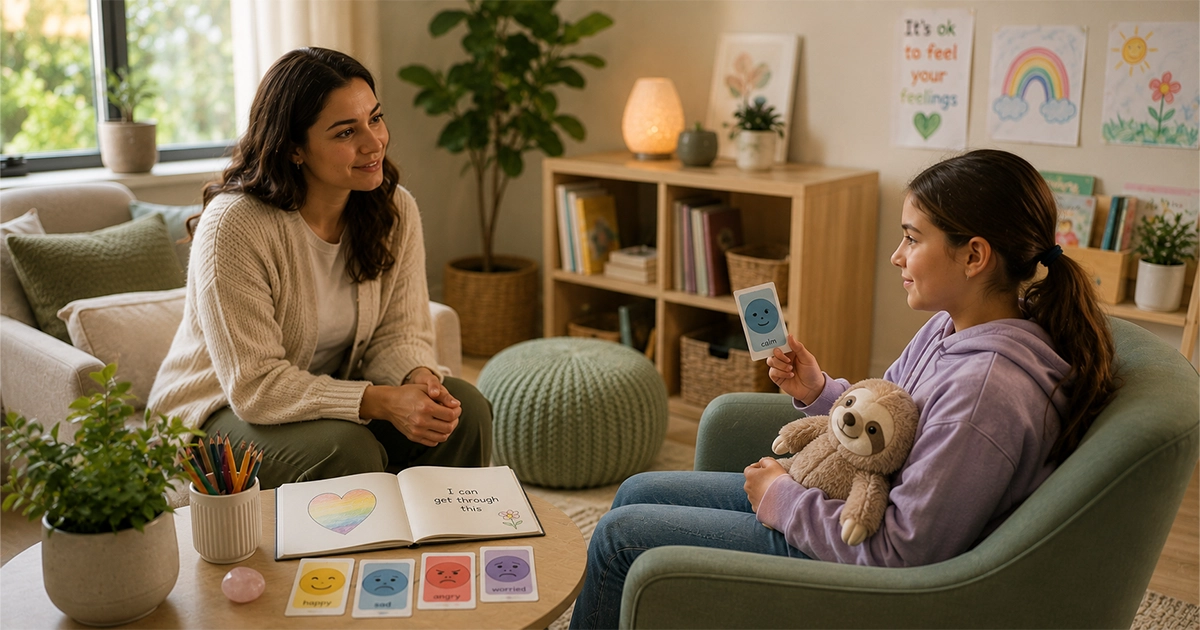
Feeling disconnected does not always mean being physically alone.
You may have people around you and still feel as though no one really understands what you are carrying. Grief, anxiety, stress, major life changes, or long periods of emotional strain can make it harder to reach out, trust others, or feel connected in the ways you once did.
Support groups can offer a different kind of space: one where people come together around shared experiences or goals, listen to one another, learn practical skills, and take part at a pace that feels manageable.
At Nurturing Wellness, our support groups in Mississauga are designed to support connection, emotional awareness, coping skills, and shared learning in a professionally guided environment.
How Can Support Groups Help You Feel Less Alone?
Support groups can help reduce feelings of isolation by creating regular opportunities to connect with people who may understand similar experiences. A professionally guided group can also provide structure, reflection, practical coping tools, and a space to listen before you feel ready to share.
The value is not simply in “talking about problems.” It is in experiencing connection while learning that difficult feelings do not have to be carried entirely on your own.
The Public Health Agency of Canada recognizes social connection and community belonging as important contributors to mental health and well-being. Strong social support is also associated with greater life satisfaction and psychological well-being.
Why Can Emotional Struggles Lead to Disconnection?
When something feels painful or overwhelming, withdrawing can feel protective.
You may avoid reaching out because you do not want to burden someone. You may worry that other people will not understand. Or you may simply feel too emotionally exhausted to explain what is happening.
Over time, that distance can reinforce thoughts such as:
- “No one really gets it.”
- “I should be able to manage this myself.”
- “Other people have it worse.”
- “I don’t know what to say anymore.”
This does not mean you are doing anything wrong. It means connection may have become harder at a time when support could be especially valuable.
Canadian public-health guidance identifies isolation from community and supportive relationships as factors that can weaken positive mental health, while connection and social support can contribute to well-being.
What Is the Difference Between a Support Group and Group Therapy?
The terms are sometimes used interchangeably, but they are not always exactly the same.
Formal group therapy generally involves psychotherapy delivered to several participants by one or more trained mental-health professionals. The American Psychological Association describes group therapy as a setting where people can work on concerns while benefiting from professional guidance and the perspectives of other group members. American Psychological Association: Understanding Group Therapy
A support group may be therapeutic, educational, skills-based, peer-oriented, or professionally facilitated depending on the program.
At Nurturing Wellness, support groups and workshops are guided by qualified professionals. The exact topic, facilitator, structure, frequency, and format may vary depending on the current offering.
How Can a Group Help You Reconnect With Other People?
You Hear Experiences That Feel Familiar
One of the most powerful moments in a group can be hearing someone describe a feeling you thought only you had.
That sense of recognition can challenge the belief that you are alone in your experience.
You may not have the same story as another participant, but you may recognise the fear, uncertainty, grief, frustration, or self-doubt underneath it.
Research on structured group interventions aimed specifically at social disconnection has found improvements in loneliness and social anxiety among participants. Those findings do not mean every support group will produce the same outcome, but they support the broader idea that belonging and group connection can matter in emotional well-being. PubMed: Groups 4 Health randomized trial
You Can Practise Being Heard
If you have spent a long time keeping emotions to yourself, sharing with others can feel unfamiliar.
A guided group can provide opportunities to practise:
- Putting emotions into words
- Expressing a need or boundary
- Listening without immediately fixing
- Receiving feedback
- Staying present during an uncomfortable conversation
These are relationship skills that can extend beyond the group into friendships, family relationships, work, and everyday life.
You Gain Different Perspectives
When we are stressed, it can become difficult to see alternatives.
Listening to how other people understand or respond to a challenge can introduce new perspectives without telling you what you “should” do.
The American Psychological Association notes that one benefit of group therapy is exposure to different ways people approach problems and make changes.
Do You Have to Share Everything in a Support Group?
No.
You should not have to disclose personal experiences before you feel ready.
At Nurturing Wellness, participation is intended to happen at a pace that feels respectful and manageable. Some people speak early. Others listen first and gradually become more comfortable participating.
The current Support Groups service guidance specifically notes that participants can choose how openly they share, and facilitators explain expectations around privacy and confidentiality.
Listening can be a meaningful form of participation too.
Sometimes hearing how another person names an emotion helps you understand your own experience before you are ready to put it into words.
What Can You Learn in a Professionally Guided Support Group?
Support groups can involve more than sharing experiences.
Depending on the group’s focus, participants may explore practical skills related to emotional awareness, stress, communication, coping, relationships, or personal growth.
Emotional Awareness
You may practise identifying what you are actually feeling rather than stopping at “fine,” “stressed,” or “bad.”
Learning to distinguish between disappointment, grief, anger, fear, shame, frustration, or loneliness can make it easier to understand what you need.
Communication and Boundaries
Group discussions can provide opportunities to practise saying things such as:
“I need some time before I respond.”
“I understand your perspective, but my experience was different.”
“I am not ready to talk about that yet.”
These skills can support healthier communication outside the group as well.
Coping and Grounding Skills
Depending on the group, guided exercises may include grounding, mindfulness, reflection, stress-management strategies, or ways to notice emotional patterns.
The aim is not to eliminate difficult emotions. It is to develop more supportive ways of responding to them.
Self-Reflection
Interactions with other people can sometimes help us notice patterns that are harder to see alone.
You may begin recognising:
- When you withdraw
- When you minimise your needs
- What situations increase stress
- How you respond when you feel misunderstood
- What helps you feel safer and more connected
What If You Feel Nervous About Joining a Group?
Feeling nervous about joining a group is understandable.
You may wonder:
“What if I don’t know what to say?”
“What if everyone else is more comfortable than I am?”
“What if I become emotional?”
“What if I realise the group is not right for me?”
A good fit matters.
Before joining, it can help to ask about the group’s purpose, facilitator, confidentiality expectations, format, schedule, and whether there is a registration or consultation process.
Nurturing Wellness notes that some groups may include a brief consultation or registration step to help determine whether the group fits your needs. Offerings can also change during the year, so checking the current schedule is important.
Can Support Groups Complement Individual Therapy?
Yes. They can serve different purposes.
A group offers shared experience, connection, learning, and opportunities to interact with others.
Individual therapy in Mississauga offers a private one-to-one setting where your personal history, needs, goals, and experiences can be explored in greater depth.
Some people participate in one format. Others may use both at different points in their lives.
The appropriate approach depends on your goals, comfort, needs, and the type of support available.
How Can You Start Reconnecting Before Joining a Group?
If isolation has become familiar, reconnecting does not have to begin with a major conversation.
You might start with one small step.
Write down what you wish someone understood about how you are feeling.
Send a short message to someone you trust.
Notice the thought that tells you not to reach out, and ask whether it is protecting you or keeping you disconnected.
Practise naming one emotion more specifically each day.
Choose one relationship or community space where connection has felt safe in the past.
These actions do not replace therapy or professional support, but they can help you begin noticing where connection still feels possible.
Support Groups in Mississauga at Nurturing Wellness
Nurturing Wellness offers support groups and workshops designed around shared learning, emotional awareness, practical skills, and community connection.
Current offerings may focus on areas such as stress, emotional wellness, mindfulness, communication, personal development, or other specific themes. Group topics and schedules can change throughout the year.
Facilitation may be provided by a Registered Psychotherapist or another qualified professional with relevant experience, depending on the group. Virtual options may also be available for some programs.
For the latest availability, format, facilitator information, and registration requirements, visit our Support Groups in Mississauga service page.
Reconnection Does Not Have to Happen All at Once
Feeling connected again often develops gradually.
It may begin with listening.
Then recognising yourself in someone else’s experience.
Then feeling safe enough to contribute a sentence.
Then realising that being understood does not require having the perfect words.
Support groups can provide a structured way to experience connection while building emotional awareness and coping skills alongside others.
If you are considering group support, explore Nurturing Wellness’s current support groups and workshops or book a consultation to discuss what type of support may fit your needs.
Frequently Asked Questions
Support groups can create regular opportunities to connect with people who understand similar emotions, challenges, or life experiences. A guided group may help participants feel less alone while developing communication, emotional awareness, and coping skills. Individual experiences vary, and the value of a group depends partly on its structure, topic, facilitator, and personal fit.
No. Some people feel ready to participate immediately, while others prefer to listen first. At Nurturing Wellness, participants are encouraged to engage at a pace that feels manageable. Group expectations, privacy, and confidentiality limits should be explained so you understand the setting before deciding what you want to share.
Not always. Group therapy is generally a form of psychotherapy led by trained mental-health professionals. Support groups may be therapeutic, educational, skills-based, or peer-oriented depending on the program. Nurturing Wellness’s current groups and workshops are professionally guided, with the specific format depending on the offering.
Yes, some people use both. Individual therapy provides one-to-one support focused on your personal goals and history, while group settings add shared experience, connection, and opportunities to learn from others. Whether combining them is useful depends on your needs and should be discussed with an appropriate mental-health professional.
Some virtual groups may be available, but availability depends on the topic, facilitator, format, and schedule. Check the current Support Groups page or contact Nurturing Wellness before registering to confirm whether a particular group is offered online or in person.
Consider what you hope to gain, whether the group’s topic fits your needs, how comfortable you feel learning alongside others, and whether the format and facilitator feel appropriate. A consultation or registration conversation can also help clarify expectations and determine whether the current group is a suitable fit.