Music therapy uses music, sound, rhythm, creativity, and conversation within a therapeutic relationship. It may support children, teens, adults, and neurodivergent clients who find it difficult to express emotions through words alone. At Nurturing Wellness, music therapy is offered in Mississauga and online across Ontario.
Many people think music therapy means listening to relaxing music or learning to play an instrument. It is not music lessons, entertainment, or a performance-based activity.
Music therapy is a clinical, evidence-informed approach where music is used purposefully by a trained therapist to support emotional, social, communication, developmental, and mental health goals. The Music Therapy Association of Ontario explains that music therapy involves the use of established music therapy interventions within a therapeutic or psychotherapeutic relationship.
At Nurturing Wellness, music therapy in Mississauga is offered by Aprajita Saxena, Registered Psychotherapist (Qualifying), Certified Music Therapist (MTA), and Neurologic Music Therapist (NMT). Sessions may include talking, listening, rhythm, simple instruments, voice, movement, songwriting, or creative reflection, depending on the person’s needs and comfort level.
What Is Music Therapy?
Music therapy is a structured therapeutic approach that uses music and musical elements within a safe relationship with a trained therapist. This may include rhythm, melody, sound, silence, lyrics, movement, voice, improvisation, or listening.
The Canadian Association of Music Therapists describes music therapy as a discipline where Certified Music Therapists use music purposefully within therapeutic relationships to support development, health, and well-being.
In simple terms, music therapy gives people another way to explore what they feel, especially when words feel hard to find.
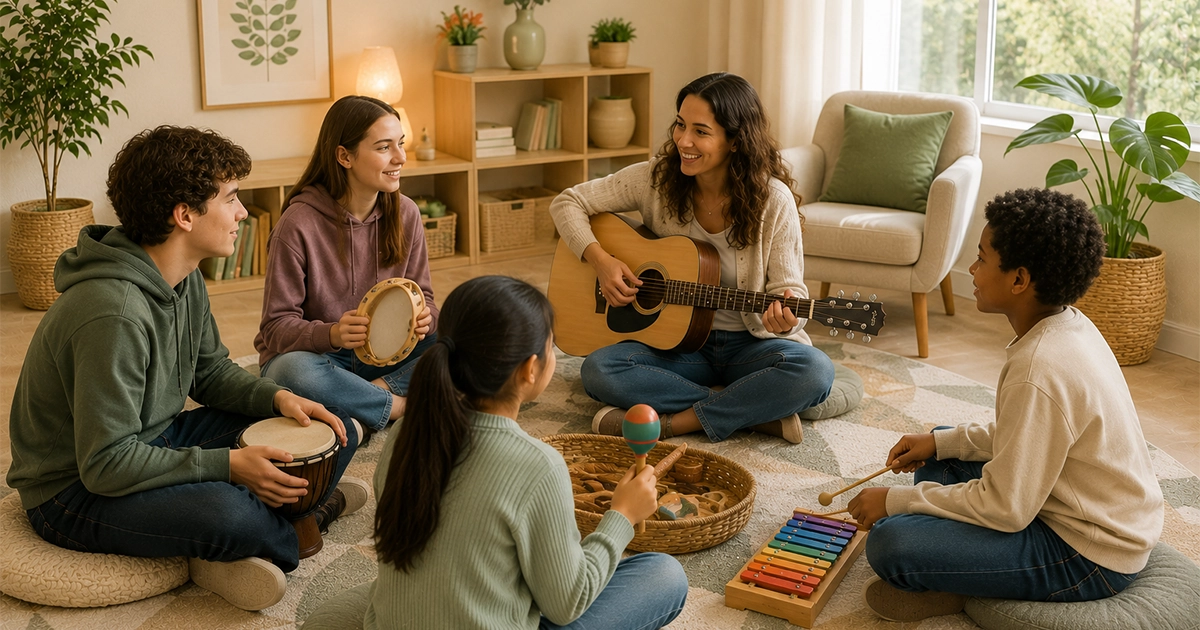
A music therapy session may include:
- Talking about what is happening emotionally
- Listening to music and noticing thoughts, feelings, or body responses
- Using rhythm or simple instruments to express emotion
- Songwriting or lyric discussion
- Movement, voice, or creative sound work
- Grounding and regulation exercises
- Parent or caregiver involvement when working with children
The goal is not to sound good, sing well, or perform. The goal is to use music as a therapeutic tool.
How Is Music Therapy Different From Just Listening to Music?
Listening to music can be comforting. Many people use music to relax, focus, grieve, feel motivated, or process memories. That can be meaningful, but it is different from music therapy.
Music therapy is guided by a trained professional. The therapist uses music intentionally, based on the client’s needs, goals, emotional state, communication style, and comfort level.
For example, one person may use rhythm to feel more grounded. Another may use songwriting to express grief. A child may use instruments to communicate feelings they cannot yet name. A teen may connect with lyrics before they are ready to speak directly.
Music therapy is not about the music alone. It is about what happens inside the therapeutic relationship through music.
Who Can Music Therapy Help?
Music therapy may support people of different ages, needs, and communication styles. It can be especially helpful for people who find traditional talk-based therapy difficult, overwhelming, or incomplete.
At Nurturing Wellness, music therapy in Mississauga may support children, teens, adults, and neurodivergent clients.
Music Therapy for Children
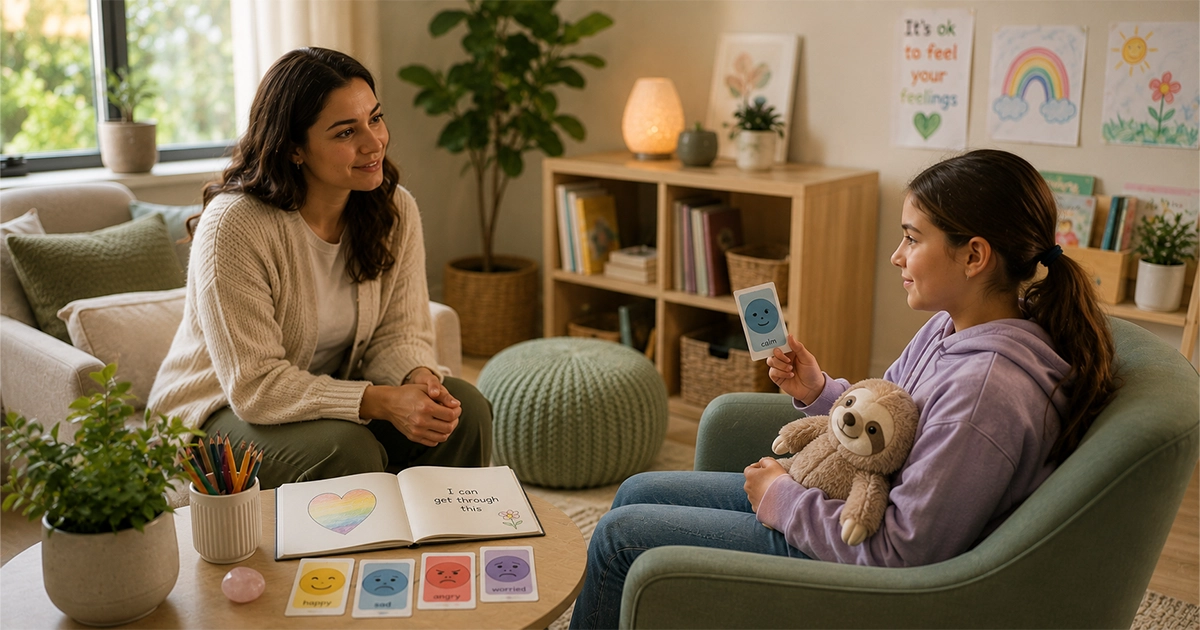
Children do not always have the words to explain what they feel. They may show emotions through behaviour, play, movement, shutdowns, meltdowns, worry, clinginess, anger, or avoidance.
Music therapy can give children a developmentally appropriate way to express feelings without needing to explain everything verbally.
For children, music therapy may support:
- Emotional expression
- Communication
- Self-regulation
- Social engagement
- Confidence
- Attention and participation
- Parent-child connection
- Transitions and change
A child may use drums, rhythm, movement, songs, or creative play to show what is happening inside. The therapist can then help the child build awareness, safety, and coping skills at a pace that fits their age and needs.
Families looking for broader emotional and behavioural support may also explore children and youth therapy in Mississauga.
Music Therapy for Teens
Teens often feel deeply but may not always want to talk directly about what is happening. Some teens shut down in traditional therapy. Others feel embarrassed, guarded, angry, anxious, or unsure how to explain themselves.
Music can offer a less direct entry point.
A teen may connect with lyrics, rhythm, silence, or sound before they are ready to speak openly. Music therapy may help teens explore identity, stress, anxiety, self-esteem, relationships, family pressure, school pressure, emotional overwhelm, or difficulty communicating.
Music therapy for teens may support:
- Emotional expression
- Anxiety and stress support
- Identity exploration
- Self-esteem
- Communication
- Regulation
- Social connection
- Creative coping skills
For some teens, music therapy feels less like being questioned and more like being understood. Parents can also read more about how music therapy can help children and teens express emotions when words feel difficult or overwhelming.
Music Therapy for Neurodivergent Clients
Music therapy can support neurodivergent children, teens, and adults, including autistic clients, people with ADHD, and individuals with developmental or communication differences.
Therapy can offer structure, repetition, sensory engagement, choice, and non-verbal expression. These qualities may help some neurodivergent clients participate in ways that feel more natural than traditional conversation.
Music therapy may support neurodivergent clients with:
- Emotional regulation
- Communication
- Social connection
- Sensory awareness
- Attention and engagement
- Self-expression
- Parent or caregiver collaboration
Research on music therapy for autistic people is developing. A Cochrane review on music therapy for autistic people found that music therapy may be associated with some areas of improvement, while also noting that evidence varies by outcome and more research is needed.
That means music therapy should not be presented as a cure or guaranteed result. It can be considered as a supportive therapeutic option, adapted to the person’s needs.
Music Therapy for Adults
Adults may come to music therapy when emotions feel too big, too tangled, or too hard to explain. Some adults have spent years talking about their experiences but still feel stuck in the body. Others may be carrying grief, anxiety, trauma, stress, identity concerns, or emotionally unsafe childhood experiences.
Music therapy may support adults who are navigating:
- Anxiety
- Stress
- Trauma responses
- Grief
- Life transitions
- Self-esteem
- Identity and belonging
- Emotional shutdown
- Nervous system overwhelm
- Difficulty expressing feelings
Music therapy does not replace all forms of therapy. For many people, it can sit alongside individual therapy in Mississauga or other therapeutic supports.
Do You Need Musical Experience?
No. You do not need to sing, play an instrument, read music, or have any musical background.
Music therapy is not about performance. There is no “right” way to take part. A person can participate through listening, choosing music, tapping a rhythm, noticing body sensations, talking about a song, writing lyrics, using simple instruments, or simply being present.
- For children, sessions may look playful and creative.
- For teens, sessions may involve music they already connect with.
- For adults, the process may be reflective, grounding, expressive, or body-aware.
The therapist adjusts the session to the person, not the other way around.
What Happens in a Music Therapy Session?
Every session depends on the client’s age, needs, comfort, and goals. A first session may begin with conversation. The therapist may ask about what brings you in, what you or your child are struggling with, and what kind of support feels helpful.
A session may include:
- Talking and emotional check-ins
- Listening to selected music
- Gentle rhythm or sound work
- Simple instruments
- Voice or movement
- Songwriting or lyric exploration
- Grounding activities
- Creative expression
- Reflection at the end of the session
For children and neurodivergent youth, sessions may also involve parent input, goal-setting, or coordination with other care providers when appropriate.
At Nurturing Wellness, music therapy sessions are available in person in Mississauga and online across Ontario. You can learn more on the Music Therapy service page.
Is Music Therapy the Same as Music Lessons?
No. Music therapy is not music lessons.
Music lessons focus on learning skills such as singing, reading music, playing an instrument, timing, technique, or performance. Music therapy focuses on emotional, relational, developmental, communication, and mental health goals.
A person may use music in both settings, but the purpose is different.
In music therapy, the question is not “How well can you play?” The question is “What can music help you express, notice, process, or understand?”
If you are unsure which approach fits best, this guide on music therapy vs talk therapy can help you understand the difference.
When Might Someone Consider Music Therapy?
Someone may consider music therapy when:
- Talking about feelings feels difficult
- A child expresses emotions through behaviour instead of words
- A teen shuts down or avoids direct conversation
- Anxiety or stress feels held in the body
- A person feels disconnected from themselves
- Traditional talk therapy has not felt like enough
- A neurodivergent client may benefit from creative or non-verbal support
- A person wants a gentle, creative way to explore emotions
Music therapy may be especially helpful for people who need more than words to express what they are carrying.
Music Therapy in Mississauga at Nurturing Wellness
Nurturing Wellness offers music therapy in Mississauga for children, teens, adults, and neurodivergent clients. Sessions are provided by Aprajita Saxena, who brings training in music therapy and psychotherapy.
Support is available for clients navigating emotional expression, anxiety, trauma responses, self-esteem, developmental differences, ADHD, autism, communication challenges, and nervous system overwhelm.
Sessions are available in person at Nurturing Wellness in Mississauga and online across Ontario. If you are unsure whether music therapy is the right fit, you can start with a free 15-minute consultation.
Summing Up
Music therapy uses sound, rhythm, creativity, and conversation within a therapeutic relationship. It may support children, teens, adults, and neurodivergent clients who need another way to express emotions, build regulation, and feel understood.
You do not need musical experience to begin. You only need a willingness to explore support in a way that feels safe and manageable.
To learn more, visit Music Therapy in Mississauga or book a free consultation with Aprajita Saxena.
Questions About Music Therapy in Mississauga
Music therapy is a clinical, evidence-informed approach that uses music, rhythm, sound, creativity, and conversation within a therapeutic relationship. It may support emotional expression, communication, regulation, self-awareness, and well-being. It is guided by a trained music therapist and does not require musical experience.
Music therapy may support children, teens, adults, and neurodivergent clients. It may be helpful for people navigating anxiety, emotional overwhelm, communication challenges, self-esteem concerns, trauma responses, developmental differences, autism, ADHD, grief, stress, or difficulty expressing feelings through words.
No. You do not need to sing, play an instrument, read music, or perform. Music therapy is not about musical skill. Sessions are adapted to your comfort level and may include listening, rhythm, conversation, simple instruments, songwriting, movement, or reflection.
Music therapy may support children and teens who struggle to express feelings, regulate emotions, communicate, or engage in traditional talk-based therapy. For some young people, music creates a safer and more natural way to explore emotions, confidence, identity, stress, or social challenges.
Yes. Nurturing Wellness offers music therapy in Mississauga and online across Ontario. Sessions are available for children, teens, adults, and neurodivergent clients. A free 15-minute consultation can help you ask questions and decide whether music therapy may be a good fit.