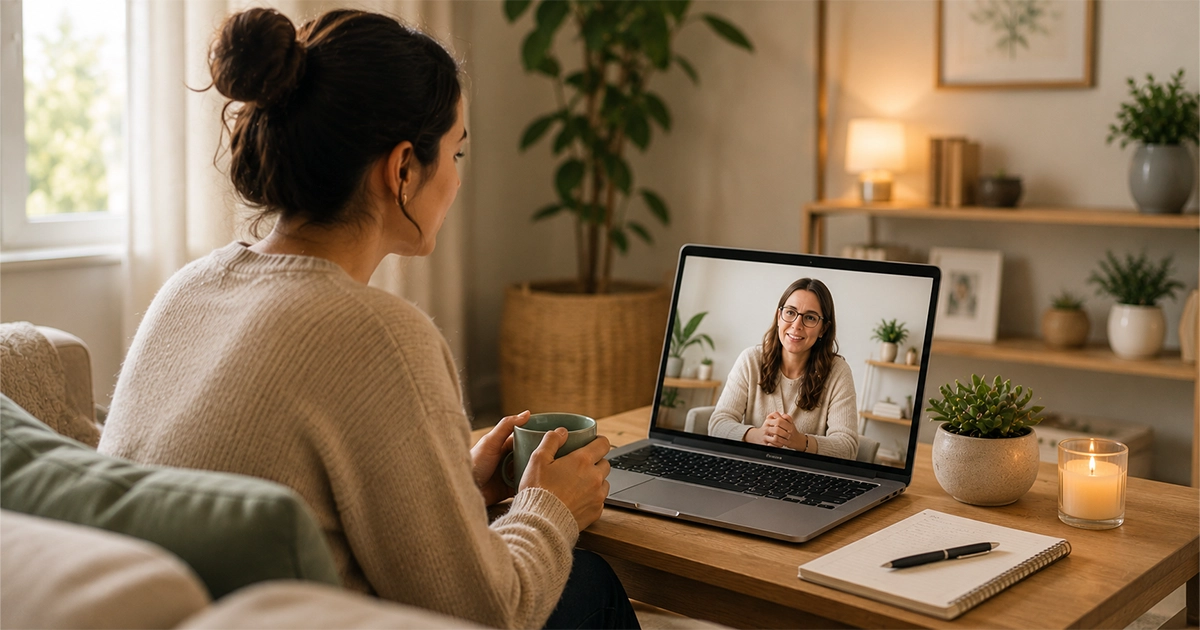
Online therapy in Ontario may be a good fit for people who want accessible, private, and flexible support from home. It can help clients manage anxiety, stress, relationships, life transitions, or emotional overwhelm when they have a quiet private space, stable internet, and feel comfortable connecting virtually.
Therapy does not always need to happen in an office to be meaningful. For many people, the hardest part of starting is not deciding they need support. It is finding time, travelling across town, arranging childcare, managing work hours, or feeling anxious about sitting in a waiting room. Online therapy in Ontario can reduce some of those barriers while still offering a real therapeutic relationship.
At Nurturing Wellness, online therapy in Ontario is designed for people who want professional support with more flexibility. It may be helpful for adults, students, couples, parents, and young people who need care that fits into real life. The important question is not whether virtual therapy is “better” than in-person therapy. The better question is whether virtual therapy Ontario support fits your needs, safety, privacy, and goals.
Who Is Online Therapy Best For?
Online therapy is often a good fit for people with busy schedules, transportation barriers, privacy needs, anxiety about starting therapy, or life changes that make in-person appointments difficult. Online counselling Ontario may support consistent care when the client can speak privately and participate safely from home.
Many people choose online therapy Mississauga because it removes the extra steps around travelling, parking, transit, waiting rooms, and scheduling gaps. A client may attend from home during a lunch break, after work, during a university term, or while managing caregiving responsibilities. For some, therapy from home Ontario is what makes therapy possible at all.
Virtual psychotherapy Ontario can also help people maintain continuity. If you move temporarily, travel within Ontario, have a demanding job, experience illness, or need flexibility during life transitions, online sessions may help support consistent care. This can be especially important when therapy is supporting anxiety, stress, relationship strain, or emotional overwhelm.
What Is Online Therapy?
Online therapy is mental health support delivered through a secure virtual platform, usually by video, so clients and therapists can meet without being in the same physical room. An online therapist Ontario provider may use the same therapeutic skills as in-person care, adapted for a virtual setting.
Online therapy in Ontario may include individual therapy, couples therapy, youth support when appropriate, anxiety support, emotional regulation work, or help with stress and life transitions. It is not a casual video chat with advice. It is a professional therapy session with privacy expectations, informed consent, therapeutic goals, and limits of confidentiality.
Professional organizations such as the American Psychological Association have published guidance on telepsychology, including competence, confidentiality, informed consent, and technology considerations. These issues matter because virtual care should still be thoughtful, safe, and professionally managed.
Online counselling Ontario is not the same as texting a friend or using a wellness app. It is a structured therapeutic service. The format is virtual, but the purpose is still support, reflection, coping, and emotional understanding. For people who already feel nervous about reaching out, online therapy Mississauga may feel like a gentler first step.
When May Online Therapy Be a Good Fit?
Online therapy may be a good fit when access, schedule, comfort, or continuity are the main barriers to getting support. Online therapy in Ontario can help people who want therapy but find in-person visits difficult because of time, transportation, anxiety, caregiving, or privacy needs.
Busy Schedules
Online therapy for busy adults can be useful when work, parenting, school, caregiving, or shift schedules make regular in-person appointments hard. Instead of adding commute time to an already full day, online therapy for busy adults allows support to fit into a more realistic window.
This may help professionals, parents, university students, caregivers, and people balancing multiple responsibilities. For students specifically, the blog on therapy for university students in Mississauga explores how academic pressure, burnout, identity questions, and busy schedules can affect mental health.
Commuting or Transportation Barriers
Therapy from home Ontario can help people who do not drive, have limited transit access, experience mobility barriers, or find commuting stressful. In areas where traffic, weather, caregiving, disability, or distance create obstacles, virtual therapy Ontario may make care more accessible and consistent.
Anxiety About Starting Therapy
Online therapy for anxiety may feel less intimidating for people who worry about entering a clinic, sitting in a waiting room, or being seen by others. The National Institute of Mental Health explains that anxiety can affect thoughts, body sensations, and behaviour, including avoidance. Online therapy for anxiety may help some clients begin support from a familiar environment.
Privacy and Comfort at Home
Some clients feel more comfortable opening up from a private room at home. Therapy from home Ontario can feel grounding when the setting is quiet, safe, and free from interruptions. Privacy still matters. A bedroom, home office, parked car, or private workspace may be appropriate if no one else can overhear.
Continuity During Life Changes
Virtual psychotherapy Ontario can support continuity during moves, caregiving changes, illness, work travel within Ontario, seasonal schedules, or major transitions. A client may not need to pause therapy every time life becomes less predictable. This can be especially useful for ongoing emotional support or anxiety management.
What Types of Support Can Be Offered Online?
Online therapy may support anxiety, stress, relationship concerns, burnout, life transitions, emotional overwhelm, grief, identity questions, and ongoing personal growth. Online counselling Ontario can be adapted for individuals, couples, and some teens when privacy, engagement, and clinical fit are appropriate.
- For one-to-one support, individual therapy in Mississauga can be offered in ways that help adults explore anxiety, stress, patterns, self-esteem, grief, or transitions. Online therapy for anxiety may include grounding skills, thought patterns, avoidance, body cues, and coping strategies. It may also include emotional support for people who feel overwhelmed but still functioning.
- For partners, couples therapy in Mississauga may be available online when both people can participate safely and privately. Virtual sessions may help couples with busy schedules, childcare limits, or transportation barriers, though the therapist may assess whether the format is suitable for the level of conflict.
- For younger clients, children and youth therapy in Mississauga may sometimes include online options depending on age, attention span, privacy, parent involvement, and therapeutic goals. Teens may find virtual psychotherapy Ontario easier to begin, while younger children may need more support from caregivers.
How Do You Prepare for an Online Therapy Session?
Preparing for online therapy can make the session feel calmer, more private, and more focused. Online therapy in Ontario works best when you choose a quiet space, test your technology, reduce interruptions, and give yourself time before and after the session to transition.
A simple preparation checklist includes:
- Choose a private room where others cannot overhear, or use headphones for extra privacy.
- Test your internet, camera, microphone, and device before the session begins.
- Close unrelated tabs, silence notifications, and reduce distractions.
- Keep water, tissues, a notebook, or grounding items nearby.
- Sit somewhere comfortable but alert, not somewhere you are likely to fall asleep.
- Give yourself five to ten minutes after the session before returning to work, parenting, or errands.
- Tell your therapist if the virtual format feels awkward, distracting, or emotionally difficult.
These steps are especially useful for online therapy for busy adults because it can be tempting to fit sessions between tasks with no breathing room. Therapy from home Ontario is more effective when you treat the time as a real appointment, not something squeezed between emails and chores.
When May In-Person Therapy Be a Better Fit?
In-person therapy may be better when a client does not have privacy at home, feels unsafe, struggles with technology, needs stronger clinical containment, or would benefit from being physically present with the therapist. Virtual therapy Ontario is helpful for many people, but it is not ideal for every situation.
In-person care may be a better option if you cannot speak freely at home because family members, roommates, partners, or children may overhear. It may also be preferable if your internet connection is unreliable, you feel disconnected on video, or you need separation between your home environment and therapy.
For some clients, high-conflict couples sessions, severe dissociation, active crisis concerns, or complex safety planning may require careful assessment before online therapy in Ontario is recommended. Online therapy should not replace emergency care. If someone is at immediate risk of self-harm or suicide, contact emergency services. In Canada, call or text 9-8-8 for crisis support.
This kind of safety framing matters. Online therapy for anxiety, stress, or life transitions may be appropriate for many clients, but a therapist should still consider risk, privacy, and suitability. Nurturing Wellness can help clients explore whether online therapy Mississauga or in-person care better fits their needs.
How Nurturing Wellness Supports Online Therapy in Ontario
Nurturing Wellness offers online therapy in Ontario for clients who want flexible, accessible, and compassionate support without needing to attend in person. The focus is on making therapy feel personal and safe, even through a screen, while helping clients decide whether virtual care is the right fit.
A session may begin with what brings you to therapy: anxiety, stress, emotional overwhelm, relationship strain, burnout, grief, transition, or feeling stuck. From there, the therapist may help you identify patterns, build coping skills, explore emotional responses, and work toward realistic goals. Online therapy Mississauga can be especially helpful for people who want local care from a familiar clinic while meeting virtually.
Nurturing Wellness also recognizes that online counselling Ontario needs clear privacy and consent. Clients should understand how sessions work, what technology is used, what privacy limits exist, and what to do if a session is interrupted. A good online therapist Ontario provider should make these details feel understandable rather than overwhelming.
For people searching for therapy from home Ontario, virtual therapy Ontario, or online therapy for anxiety, Nurturing Wellness offers a supportive place to begin. The process can be practical, paced, and connected to your real life rather than built around an ideal schedule you do not have.
Summing Up
If accessibility, privacy, anxiety, transportation, or a busy schedule has made therapy harder to start, online care may be worth exploring. Nurturing Wellness offers online therapy in Ontario, online therapy Mississauga, virtual psychotherapy Ontario, and online therapy for busy adults who want support that fits real life.
To begin, book a consultation and explore whether virtual therapy is a good fit.
FAQ
Online therapy is professional mental health support delivered virtually, usually through secure video sessions. It allows you to meet with a therapist without attending a clinic in person. Sessions may focus on anxiety, stress, relationships, life transitions, grief, or emotional overwhelm. The format is virtual, but the session still includes privacy, consent, therapeutic goals, and professional boundaries.
Online therapy may be available across Ontario when the therapist is permitted to provide services to clients located in Ontario and the client has privacy, internet access, and a suitable clinical fit. Some clients choose virtual care because they live outside the immediate clinic area, commute frequently, or need flexible access. Always confirm location and service eligibility when booking.
Online therapy can be private when both the therapist and client use appropriate safeguards. Clients should choose a quiet room, use headphones, and avoid public Wi-Fi when possible. Therapists should explain privacy practices, confidentiality, and limits of confidentiality. If you live with others, planning your session time and location is important so you can speak freely.
You usually need a private space, stable internet, a device with camera and microphone, and enough time to attend without rushing. Headphones can help with privacy. It is also useful to keep water, tissues, and notes nearby. Before the first session, test your connection and make sure you know how to access the virtual platform.
Online therapy may support anxiety when the client can engage safely and privately. It can help with overthinking, avoidance, stress responses, panic sensations, social anxiety, or life transitions. Some people feel less anxious starting therapy from home. Others prefer in-person support. A therapist can help assess whether online therapy for anxiety fits your needs and comfort level.
In-person therapy may be better if you do not have privacy at home, feel unsafe, struggle to stay present on video, have unreliable technology, or need more direct clinical support. It may also be preferred for certain high-risk situations. Online care can be helpful, but it should match the client’s safety, privacy, symptoms, and therapeutic goals.
Couples may be able to do online therapy when both partners have privacy, can participate safely, and are able to communicate without the virtual format increasing conflict. Online sessions can be useful for busy schedules, childcare challenges, or transportation barriers. The therapist may assess whether online or in-person couples therapy is the better fit based on the relationship concerns.