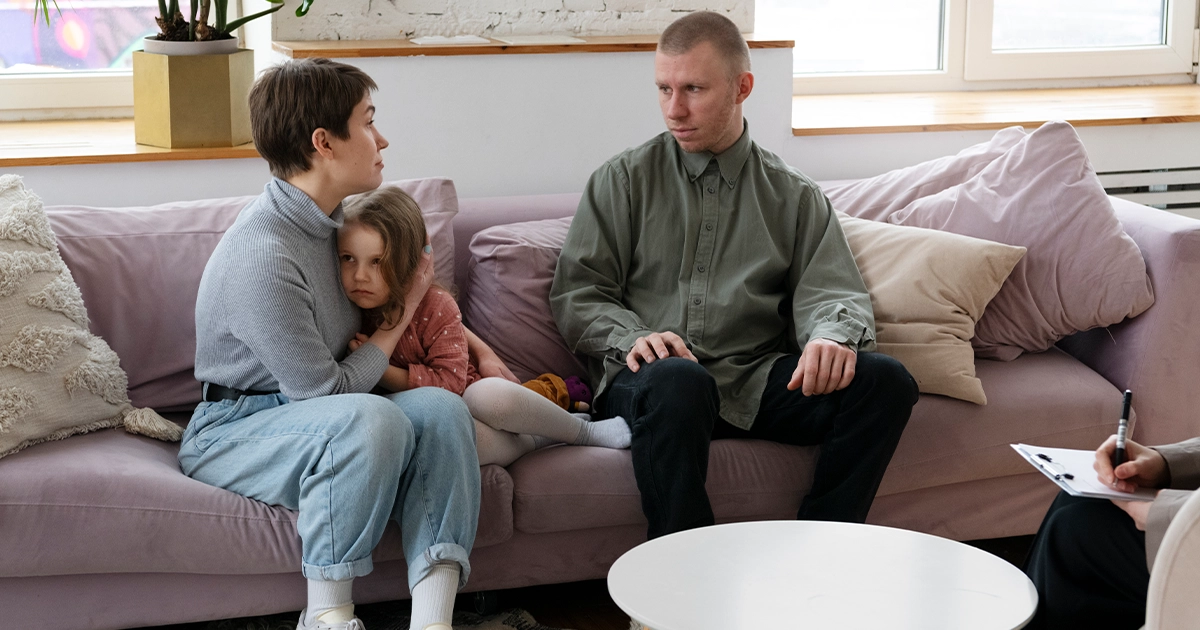
Separation or divorce can change many parts of a child’s life at once.
There may be two homes, different routines, new schedules, less time with one parent, changes at school, or tension between adults. Even when a separation is the healthiest decision for the family, children can still have complicated feelings about what is changing.
Some children talk openly. Others become quieter, more irritable, clingy, worried, or easily overwhelmed.
These reactions do not automatically mean a child needs therapy. Many adjust with time, reassurance, predictable routines, and supportive parenting. Therapy may help when distress persists or begins interfering with everyday life.
At Nurturing Wellness, Children & Youth Therapy in Mississauga can provide age-appropriate support for children and teens navigating divorce, separation, and other family transitions.
How Can Divorce or Separation Affect a Child?
Children can respond to separation or divorce with sadness, anger, worry, confusion, relief, self-blame, behaviour changes, or difficulty adjusting to new routines. Reactions vary according to age, temperament, family circumstances, and the amount of conflict or disruption surrounding the separation. Many children adjust well, while others may benefit from additional support.
Justice Canada emphasizes that most children adjust successfully after parental separation, while factors such as ongoing conflict, instability, and changes in parenting can make adjustment more difficult. Canadian guidance on children and separation is useful because it shifts the focus away from assuming that divorce itself determines a child’s outcome.
The environment around the separation matters.
What Reactions Are Common at Different Ages?
Children understand family change differently as they develop.
Younger Children
Preschool and early elementary-aged children may:
- become more clingy
- have difficulty separating from a parent
- become upset around handovers
- show changes in sleep or toileting
- have more tantrums
- ask repeatedly whether parents will reunite
- believe they caused the separation
Young children often need simple explanations and repeated reassurance that the separation is an adult decision and is not their fault.
School-Aged Children
Children in this age group may:
- feel sad, angry, or embarrassed
- struggle with concentration
- worry about where they will live
- feel caught between parents
- hope intensely that parents will reunite
- become more argumentative or withdrawn
- experience changes in school performance
Teens
Teenagers may understand more of the situation but still find the transition difficult.
They may become irritable, distant, worried about finances or living arrangements, protective of one parent, or frustrated about how the separation affects their social life.
The American Academy of Pediatrics recommends clear, age-appropriate communication and preparing children for what will change.
How Do I Know Whether My Child Is Struggling With the Separation?
Look for changes from your child’s usual pattern, not one isolated reaction.
Possible signs include:
- persistent sadness or irritability
- increased anxiety or worry
- trouble sleeping
- frequent stomach aches or headaches after medical causes are considered
- withdrawal from friends or activities
- declining school performance
- increased aggression or defiance
- strong distress before transitions between homes
- repeated self-blame
- becoming unusually responsible for a parent’s emotions
- regression to younger behaviour
A difficult week does not necessarily mean therapy is needed. Concern increases when patterns continue, become more intense, or interfere with school, friendships, sleep, family relationships, confidence, or routines.
If you are unsure whether broader professional support may be appropriate, Nurturing Wellness’ guide to when a child may benefit from therapy can help you look at the bigger picture.
Why Does Parental Conflict Matter So Much?
One of the most important factors in children’s adjustment is the level of conflict they are exposed to.
Justice Canada states that ongoing parental conflict can affect children’s emotional health, social relationships, and school functioning. Parents are encouraged to shield children from disputes and avoid placing them in the middle of adult disagreements.
This can mean avoiding:
- asking a child to carry messages between parents
- criticizing the other parent in front of the child
- questioning the child about the other household
- asking the child to choose sides
- sharing adult legal or financial details
- using the child for emotional support
A child may love both parents even when the adults no longer have a relationship. Allowing that relationship without guilt can reduce emotional pressure, provided contact is safe and appropriate.
How Can Child Therapy Help After Divorce or Separation?
Therapy cannot change the family structure or resolve legal disputes.
What it can do is give the child a developmentally appropriate place to make sense of the change and build coping skills around what they are experiencing.
Give the Child Space to Express Mixed Feelings
A child can love both parents and still feel angry.
They can miss their old family routine and also feel relieved that there is less conflict.
They can enjoy time in one home and still miss the other parent.
Therapy gives children space for these mixed emotions without asking them to protect an adult’s feelings.
Reduce Self-Blame
Children sometimes believe:
“If I had behaved better, maybe they would still be together.”
or:
“Maybe I can fix this.”
Therapy can reinforce that separation is an adult decision and help children separate their own behaviour from responsibility for the relationship between their parents.
Build Coping Skills for Transitions
Moving between homes can be emotionally demanding, even when both homes are supportive.
Therapy may help a child identify what makes handovers difficult and practise strategies such as:
- preparing for transitions in advance
- keeping important comfort items consistent
- using a visual schedule
- naming feelings before a handover
- creating a predictable arrival routine
The goal is to make transitions more manageable, not remove every difficult feeling.
Help Children Communicate What They Need
Some children cannot easily say:
“I miss Mum when I’m at Dad’s.”
“I’m worried you’ll leave too.”
“I don’t want to hear about the argument.”
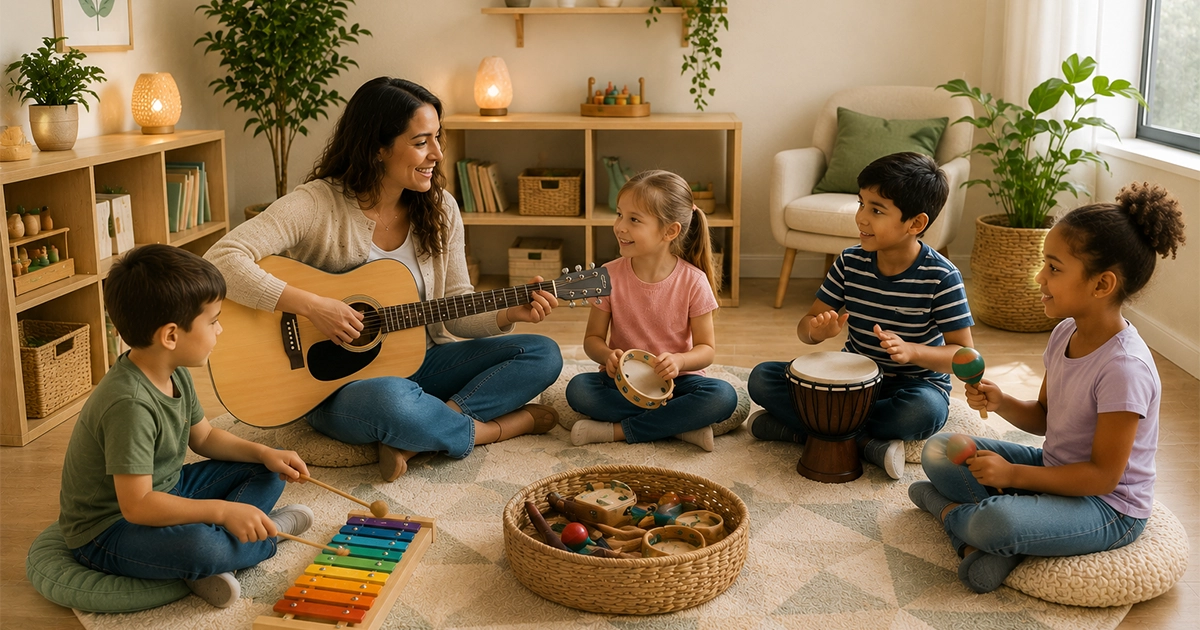
Younger children may use play, drawing, games, or stories rather than direct conversation.
Nurturing Wellness’ child-therapy approach includes play and creative activities for younger children, while older children and teens may use more conversation and skill-building.
If emotional expression itself is difficult, our guide to helping children express emotions explores that skill in more detail.
What Can Parents Do to Help a Child Adjust?
Therapy works best when the child’s everyday environment also supports adjustment.
Reassure Them That It Is Not Their Fault
Children may need to hear this more than once.
A simple message can be:
“This is an adult decision. You did not cause it, and you do not have to fix it.”
Keep Routines Predictable Where Possible
Meals, bedtime, school, extracurricular activities, and regular contact with important people can provide stability during a period of change.
Both Justice Canada and the American Academy of Pediatrics emphasize consistency and predictable routines as helpful during separation.
Tell Children What Will Actually Change
Uncertainty can be harder than the truth.
Give age-appropriate information about:
- where they will sleep
- when they will see each parent
- whether school will change
- what will stay the same
Do not give details they do not need about finances, infidelity, legal disputes, or blame.
Let Them Have Their Own Relationship With Each Parent
Avoid asking children to report on the other household or prove loyalty.
A child should not have to hide enjoying time with one parent to protect the feelings of the other.
Listen Without Trying to Fix Every Feeling
A child may say:
“I hate this.”
You do not need to convince them immediately that everything will be fine. Sometimes:
“I know this is a big change. I’m here to listen.”
is more useful.
What If Transitions Between Homes Are the Hardest Part?
Some children seem settled most of the week and become distressed around pick-up or drop-off.
That does not necessarily mean something is wrong in either household. Transitions can involve repeated separation, anticipation, routine changes, or loyalty worries.
Parents can help by keeping handovers:
- predictable
- calm
- brief when tension is high
- free from adult arguments
- focused on the child rather than the co-parenting relationship
If transition distress is persistent or intense, therapy can help explore what the child is experiencing without automatically assuming the cause.
When Should Parents Consider Therapy After Divorce?
Therapy may be worth exploring when:
- distress continues for several weeks and is not gradually easing
- school performance or attendance changes significantly
- sleep problems persist
- the child withdraws from friends or usual activities
- anger or behaviour problems become more intense
- transitions between homes repeatedly cause major distress
- the child shows strong guilt or self-blame
- anxiety begins limiting everyday activities
- the child says they feel responsible for a parent’s well-being
You do not have to wait until the situation becomes a crisis. Therapy can be presented as another source of support during a major family transition, not proof that something is “wrong” with the child.
Child Therapy After Divorce at Nurturing Wellness in Mississauga
Nurturing Wellness supports children, teens, and families navigating family transitions, anxiety, behavioural changes, trauma, emotional overwhelm, and relationship stress.
Omaima Rashed, Registered Psychotherapist, has more than 15 years of clinical experience working with children, adolescents, and families and supports concerns including school stress, behaviour, anxiety, and emotional development.
Sarah Mantegazza, Registered Psychotherapist, works with children, teens, adults, and families and has training in Play Therapy and Theraplay.
Parents can also be involved when helpful. If family communication and parent-child connection are being affected by the transition, our guide to family-inclusive child therapy explains how therapy can include caregivers while keeping the child’s needs at the centre.
Families can access child and youth therapy in person in Mississauga, with virtual options available across Ontario where appropriate.
If separation or divorce is beginning to affect your child’s emotional well-being, routines, school life, or relationships, you can explore Children & Youth Therapy at Nurturing Wellness or book a free 15-minute consultation to discuss what kind of support may fit.
Frequently Asked Questions
No. Many children adjust with supportive parenting, predictable routines, and time. Therapy may be helpful when distress persists, interferes with daily life, or is difficult for the child or family to manage.
Use simple, age-appropriate language. Explain what will change, reassure them that the separation is not their fault, and avoid sharing adult details or blaming the other parent.
The transition itself may be tiring or emotionally difficult. Changes in routine, missing the other parent, different expectations, or loyalty worries can all contribute. Avoid assuming the behaviour proves something negative about the other household.
Yes. Therapy can help children understand that separation is an adult decision, explore guilt or worry, and develop a more accurate understanding of their role in the family change.
That depends on the child’s needs, consent and legal circumstances, safety considerations, and the therapist’s treatment plan. The therapist can explain how parent communication will be handled in your family’s situation.
Seek professional guidance when there are persistent changes in mood, sleep, school functioning, friendships, behaviour, or daily routines, or when your child expresses significant guilt, hopelessness, self-harm thoughts, or safety concerns.